The Heterogeneity Problem: Can Math Models Make Clinical Trials Smarter?
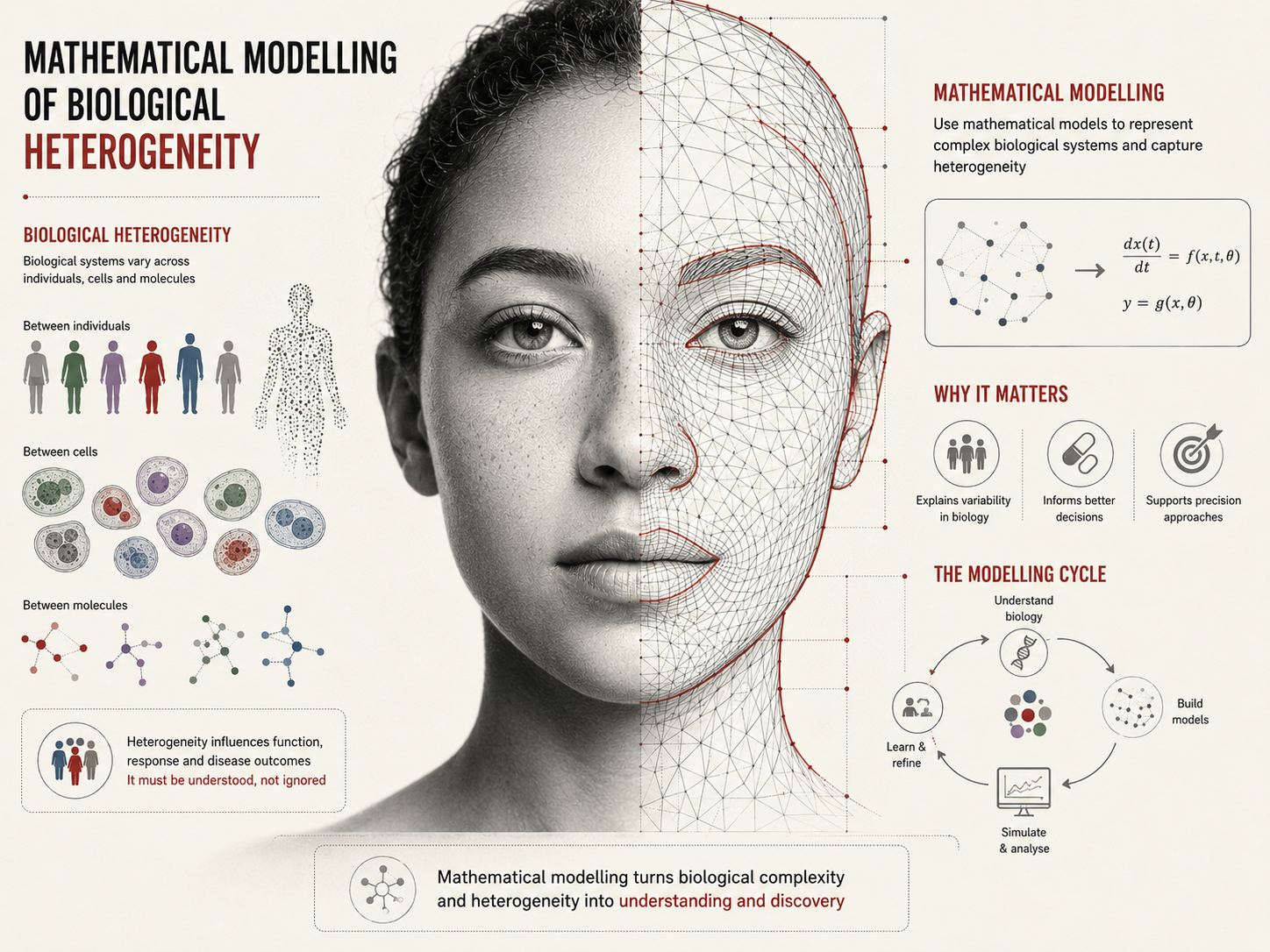
Rare diseases, especially lysosomal storage disorders, remain among the hardest areas of clinical research. Why? Small patient populations, delayed diagnosis, and wide biological variability make traditional trial designs difficult to apply. Mucopolysaccharidoses, Fabry disease, and Niemann-Pick type C can differ greatly between patients, even within the same diagnosis. Heterogeneity includes genetic mutations, biochemical profiles, age of onset, symptom severity, and response to therapy. Mathematical modeling of this heterogeneity has become an essential tool for enhancing the design and interpretation of clinical trials in rare diseases, where genetic and phenotypic diversity, along with limited patient populations, present significant challenges
Biological heterogeneity
In lysosomal storage disorders, heterogeneity is not a minor complication — it is central to the disease process. Different mutations may produce severe early-onset disease, attenuated adult forms. Or unpredictable clinical courses. Biomarkers such as urinary glycosaminoglycans, keratan sulfate, lyso-Gb3, and cholestane-triol help quantify disease burden, but they do not always fully explain clinical outcomes.
Mathematical modelling
Mathematical and computational models offer a way to organize this complexity. By integrating genetic data, biomarkers, clinical scores, and treatment response patterns. Models can identify patient subgroups, predict disease progression, and support more precise endpoint selection. This is especially important when trials include very few participants.
Clinical trial design
For rare diseases, better modelling can improve stratification, reduce noise in outcome interpretation, and help match therapies to the patients most likely to benefit. It can also support adaptive trial designs, composite endpoints, and individualized outcome measures.
Future progress depends on stronger biomarker discovery, shared natural history datasets, and closer collaboration between clinicians, statisticians, and computational scientists. Integrating mathematical modelling into trial design may accelerate the development of targeted, effective, and individualized therapies for rare disease patients.
Follow our Substack